Chain & Sprockets
- Yamaha YZF-R3 (2015-2025) — +1 tooth over stock (43T)
- Yamaha MT-03 (2020-2024) — +1 tooth over stock (43T)
- Kawasaki Ninja 400 (2018-2023) — +3 teeth over stock (41T)
- Kawasaki Z400 (2019-2023) — +3 teeth over stock (41T)
Requires 520 chain conversion (bike is 525 stock):
- Yamaha MT-10 (2018-2025) — +1 tooth over stock (43T)
- Yamaha MT-07 / FZ-07 (2014-2024) — +1 tooth over stock (43T)
- Yamaha MT-09 / FZ-09 (2014-2020) — -1 tooth under stock (45T)
- Yamaha YZF-R7 (2022-2025) — +2 teeth over stock (42T)
- Suzuki GSX-R1000 (2017-2024) — -1 tooth under stock (45T)
- Suzuki GSX-R750 (2011-2024) — -1 tooth under stock (45T)
- Suzuki GSX-R600 (2011-2024) — +1 tooth over stock (43T)
Additional fitment at the bottom.
Product Overview
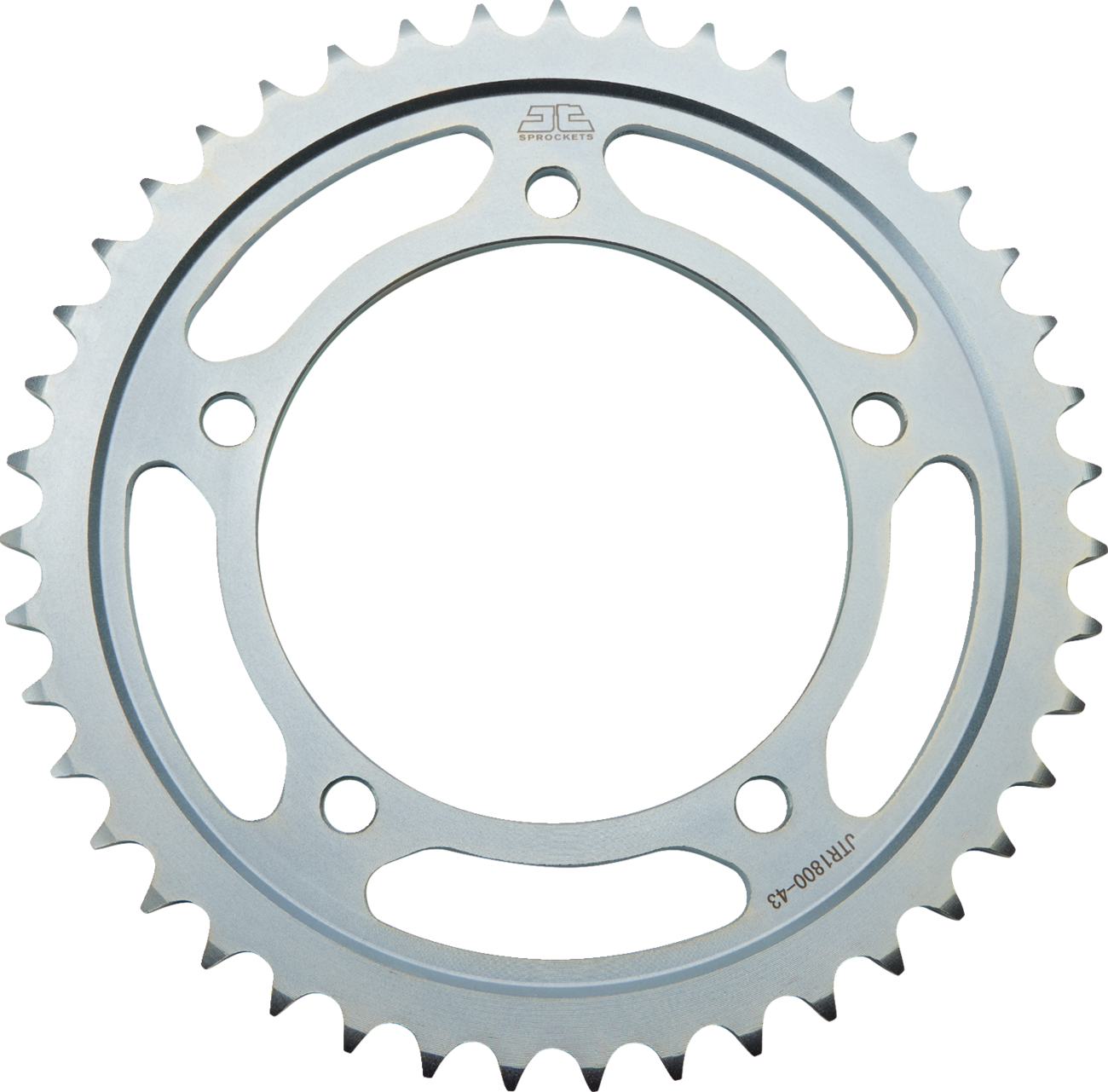
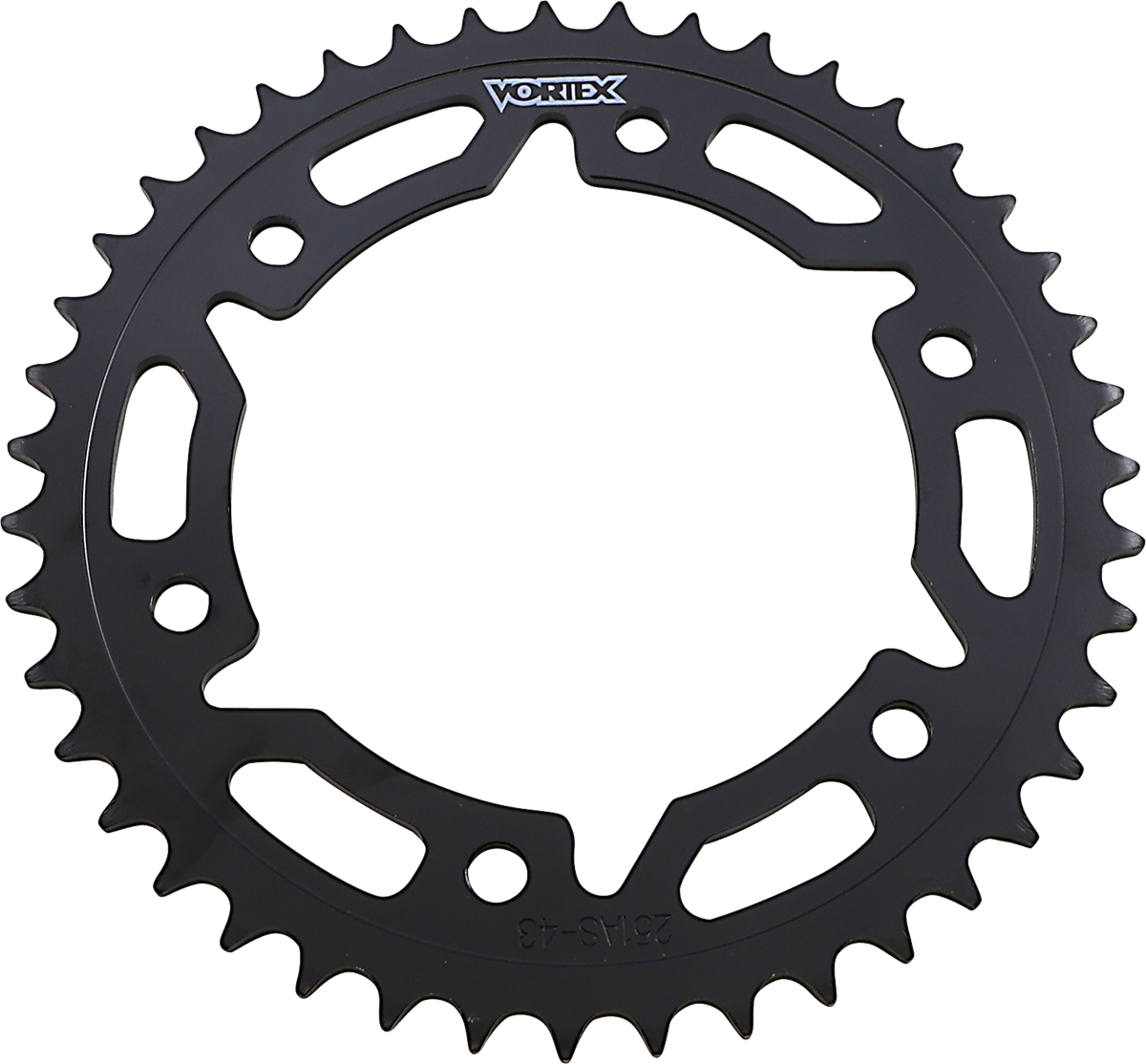
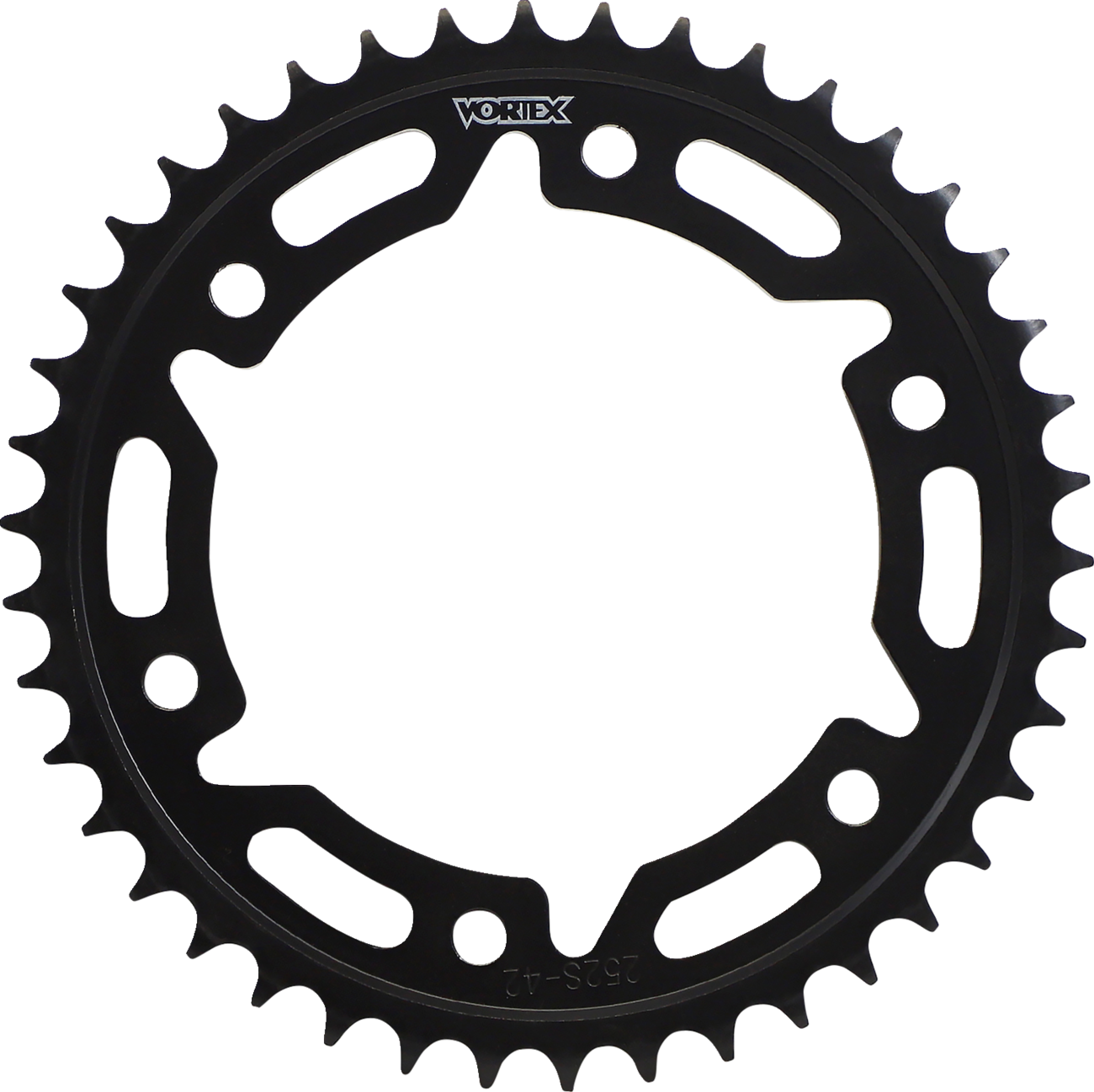
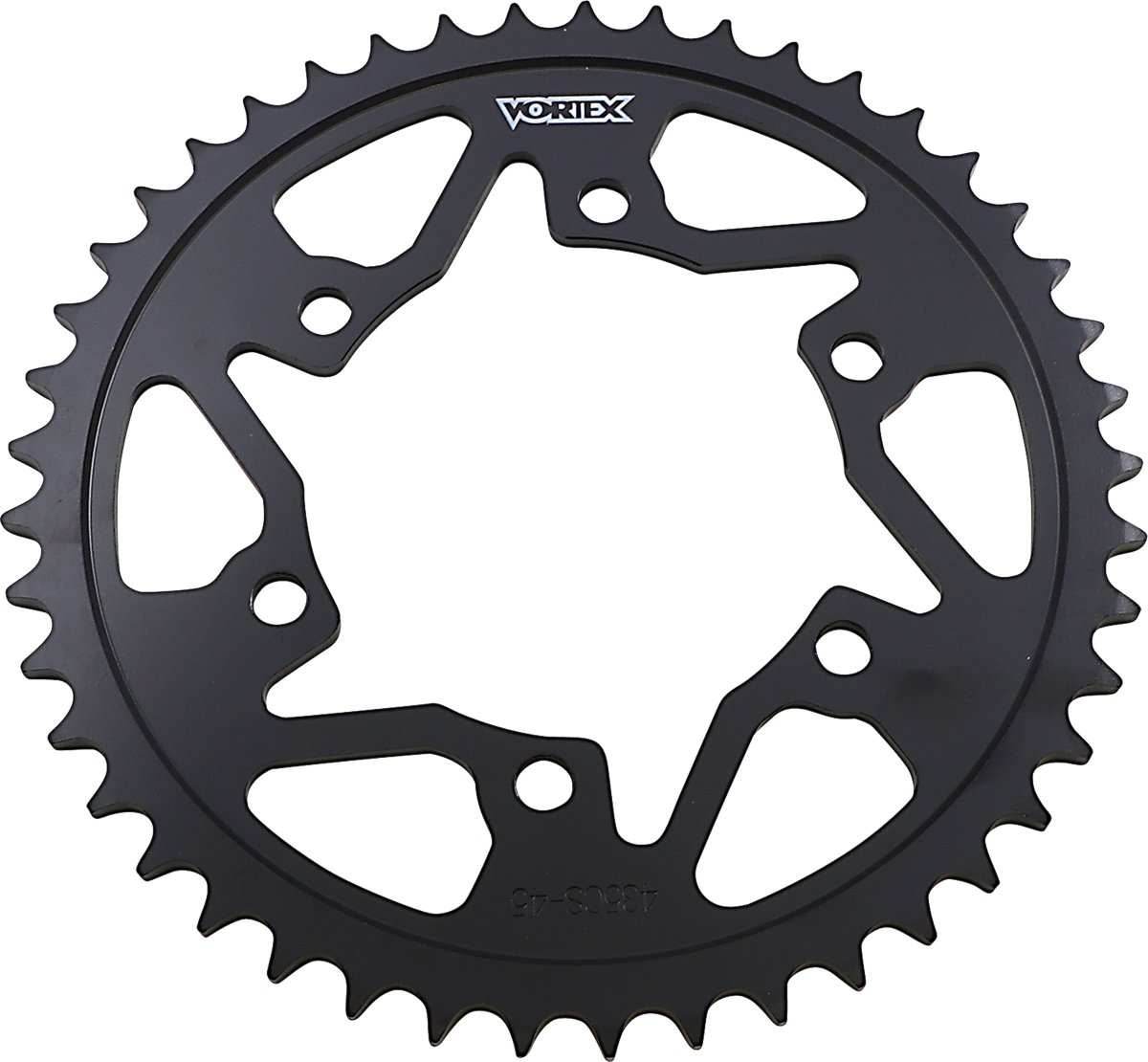
This is a 44-tooth rear sprocket built for the 520 chain pitch, machined from steel with a black zinc finish. It shares a common 6-bolt mounting pattern used across a wide range of Japanese sportbike and naked platforms, which is why it fits everything from the YZF-R3 to the GSX-R1000.
What it does to your bike's gearing depends on what you're starting with. On the R3, MT-03, Ninja 400, and Z400, your bike already runs 520 pitch stock, so this is a straight gearing swap — no other parts needed. On every other model in this listing, the factory setup uses a 525 chain, which means installing this sprocket means converting your whole drivetrain to 520 pitch (front sprocket and chain included, not just the rear). Check the Fitment table below for your bike's exact stock tooth count and chain size before ordering.
Key Technology & Design
The sprocket is machined from steel for chain-facing durability at the teeth. Weight is removed from the non-contact face of the sprocket rather than through drilled radial holes, using a lowered/stepped face design. The black zinc finish provides corrosion resistance at the metal surface.
Specs
| FieldValue | |
| Product Name | Sprocket |
| Type | Drive |
| Color/Finish | Zinc / Black |
| Material | Steel |
| Tooth Count | 44 |
| Chain Size | 520 |
| Mounting Position | Rear |
| Riding Style | Street |
Aluminum vs. Steel Rear Sprocket
Aluminum rear sprockets are noticeably lighter and reduce rotating and unsprung mass — a benefit that's most noticeable for track riders and aggressive street riders pushing hard corner-to-corner. That weight reduction comes at a cost: aluminum wears faster than steel and isn't built for maximum service life. Steel, like this sprocket, is the more practical choice for riders prioritizing longevity over shaving grams — it will outlast an aluminum sprocket under the same mileage and conditions, at the cost of a bit more rotating weight.
Why Convert to 520
Most of the bikes on this fitment list run a 525 chain from the factory — Yamaha and Suzuki spec'd the heavier pitch on these platforms for durability and longevity under stock power and torque loads. A handful of older models (FZ1/FZS1000, early R1, FZ6, and the 1999-2001 R7) ran 530 stock, an even heavier chain built for the same reason.
Converting to 520 reduces rotating mass in the drivetrain. That's a real benefit, but where you'll actually feel it depends on how you ride: track riders and aggressive street riders are the ones who typically notice the difference in acceleration and drivetrain feel. Casual street commuters generally won't feel much change.
The tradeoff is durability. A 520 chain is working with less material than the 525 or 530 chain your bike came with, and it will generally not outlast a stock-pitch chain under the same riding conditions and mileage. If you're converting, plan on a shorter service life from the chain than what you're used to.
Bottom line: if you're chasing lighter rotating weight for track or aggressive street riding and you're comfortable with more frequent chain replacement, the 520 conversion makes sense. If you put on a lot of miles and want to maximize chain life, sticking with your stock 525 or 530 setup is the more practical choice.
Fitment
Main Fitment
Year(s) — Make / Model — Stock Gearing — Stock Chain
| 2015-2025 | Yamaha YZF-R3 | 14T / 43T | 520 |
| 2020-2024 | Yamaha MT-03 | 14T / 43T | 520 |
| 2018-2023 | Kawasaki Ninja 400 | 14T / 41T | 520 |
| 2019-2023 | Kawasaki Z400 | 14T / 41T | 520 |
| 2018-2025 | Yamaha MT-10 | 16T / 43T | 525 |
| 2014-2024 | Yamaha MT-07 / FZ-07 | 16T / 43T | 525 |
| 2014-2020 | Yamaha MT-09 / FZ-09 | 16T / 45T | 525 |
| 2022-2025 | Yamaha YZF-R7 | 16T / 42T | 525 |
| 2017-2024 | Suzuki GSX-R1000 | 17T / 45T | 525 |
| 2011-2024 | Suzuki GSX-R750 | 17T / 45T | 525 |
| 2011-2024 | Suzuki GSX-R600 | 16T / 43T | 525 |
Additional Fitment
Year(s) — Make / Model — Stock Gearing — Stock Chain
| 2016-2021 | Yamaha XSR900 | 16T / 45T | 525 |
| 2015-2018 | Yamaha FJ-09 | 16T / 45T | 525 |
| 2013-2017 | Kawasaki Ninja 300 | 14T / 42T | 520 |
| 2009-2016 | Suzuki GSX-R1000 | 17T / 42T | 530 |
| 2003-2005 | Yamaha YZF-R6 | 16T / 48T | 525 |
| 2006-2020 | Yamaha YZF-R6 | 16T / 45T | 525 |
| 2006-2009 | Yamaha YZF-R6S | 16T / 48T | 525 |
| 2004-2009 | Yamaha FZ6 / FZS600 | 16T / 46T | 530 |
| 2001-2005 | Yamaha FZ1 / FZS1000 | 16T / 44T | 530 |
| 2006-2015 | Yamaha FZ1 / FZS1000 | 17T / 45T | 530 |
| 1999-2001 | Yamaha YZF-R7 | 17T / 43T | 530 |
| 1998-2003 | Yamaha YZF-R1 | 16T / 43T | 530 |
| 2004-2008 | Yamaha YZF-R1 | 17T / 45T | 530 |
| 2009-2014 | Yamaha YZF-R1 | 17T / 47T | 530 |
Gearing — Staying Stock or Making a Change
Since this is a rear sprocket, the gearing math runs opposite to a front sprocket change: adding teeth to the rear shortens gearing (quicker acceleration, higher RPM at a given speed, lower top speed), while removing teeth lengthens gearing (softer pull, lower cruising RPM, higher top speed). Removing one tooth from the rear has roughly the same effect as adding one tooth to the front.
This sprocket runs anywhere from 4 teeth shorter to 3 teeth longer than stock depending on the bike — check the Fitment table above for your model's exact stock count before deciding.
If you're considering a gearing change in addition to the conversion, here's the general framework: going shorter (more rear teeth) gets you quicker off the line and holds higher RPM at highway speed, at the cost of top speed. Going longer (fewer rear teeth) softens the pull from a stop and lowers cruising RPM, at the cost of acceleration. Stock gearing on these bikes is well matched for general street use — neither direction is right or wrong, it depends on how and where you ride.
" ["features"]=> string(0) "" ["specifications"]=> string(0) "" ["inventoryInfo"]=> string(0) "" ["warehouseFulfillment"]=> bool(true) ["loyaltyRewardAmount"]=> float(3.25) ["productID"]=> int(486) ["category"]=> string(2) "17" ["categoryName"]=> string(17) "Chain & Sprockets" ["categoryObj"]=> array(10) { ["categoryID"]=> int(17) ["parentID"]=> int(9991) ["name"]=> string(17) "Chain & Sprockets" ["slug"]=> string(15) "chain-sprockets" ["children"]=> array(0) { } ["metaTitle"]=> string(0) "" ["metaDescription"]=> string(0) "" ["metaKeywords"]=> string(0) "" ["fitmentOverride"]=> bool(true) ["fitmentOverrideDescription"]=> string(180) "IMPORTANT: Please Review Your Owner’s Manual for Exact Amounts or Sizing of This Product!
" } ["brand"]=> string(13) "Driven Racing" ["name"]=> string(78) "Driven Racing 44T Lightweight Steel Rear Sprocket - Kawasaki / Suzuki / Yamaha" ["sku"]=> string(9) "1210-0927" ["slug"]=> string(72) "driven-racing-44t-lightweight-steel-rear-sprocket-kawasaki-suzuki-yamaha" ["price"]=> float(64.99) ["salePrice"]=> NULL ["isClearance"]=> bool(false) ["weight"]=> float(36) ["excludeFromLoyalty"]=> bool(false) ["images"]=> array(1) { [0]=> array(3) { ["filename"]=> string(117) "https://s3.us-east-2.amazonaws.com/usedbikesdirect.prod.public/product-parts/c396e8bd-3c9c-4ca6-8a44-83b918bbd856.png" ["name"]=> string(16) "download (3).png" ["sortOrder"]=> int(1) } } ["tag"]=> string(0) "" ["inventoryTag"]=> string(24) "DAL: 0 HOU: 0 WEB: 20" ["colorVariant"]=> NULL ["featured"]=> bool(false) } ["hasData"]=> bool(true) ["count"]=> int(1) ["isError"]=> bool(false) ["isWarning"]=> bool(false) ["errors"]=> array(0) { } ["warnings"]=> array(0) { } ["hasErrors"]=> bool(false) ["hasWarnings"]=> bool(false) ["message"]=> string(7) "Success" }Driven Racing 44T Lightweight Steel Rear Sprocket – Kawasaki / Suzuki / Yamaha
IMPORTANT: Please Review Your Owner’s Manual for Exact Amounts or Sizing of This Product!
Speak to one of our experts today:
469-890-0123
Driven Racing
SKU:1210-0927
Description:Driven Racing 44-Tooth 520 Lightweight Steel Rear Sprocket
Main Fitment
Direct 520-pitch fit (gearing change only):
- Yamaha YZF-R3 (2015-2025) — +1 tooth over stock (43T)
- Yamaha MT-03 (2020-2024) — +1 tooth over stock (43T)
- Kawasaki Ninja 400 (2018-2023) — +3 teeth over stock (41T)
- Kawasaki Z400 (2019-2023) — +3 teeth over stock (41T)
Requires 520 chain conversion (bike is 525 stock):
- Yamaha MT-10 (2018-2025) — +1 tooth over stock (43T)
- Yamaha MT-07 / FZ-07 (2014-2024) — +1 tooth over stock (43T)
- Yamaha MT-09 / FZ-09 (2014-2020) — -1 tooth under stock (45T)
- Yamaha YZF-R7 (2022-2025) — +2 teeth over stock (42T)
- Suzuki GSX-R1000 (2017-2024) — -1 tooth under stock (45T)
- Suzuki GSX-R750 (2011-2024) — -1 tooth under stock (45T)
- Suzuki GSX-R600 (2011-2024) — +1 tooth over stock (43T)
Additional fitment at the bottom.
Product Overview
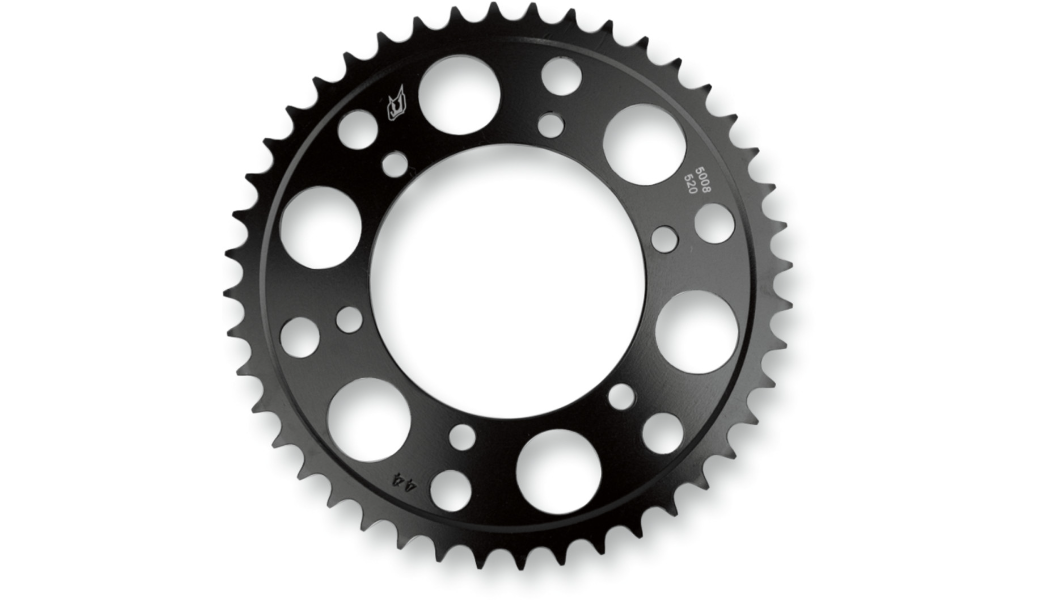
This is a 44-tooth rear sprocket built for the 520 chain pitch, machined from steel with a black zinc finish. It shares a common 6-bolt mounting pattern used across a wide range of Japanese sportbike and naked platforms, which is why it fits everything from the YZF-R3 to the GSX-R1000.
What it does to your bike’s gearing depends on what you’re starting with. On the R3, MT-03, Ninja 400, and Z400, your bike already runs 520 pitch stock, so this is a straight gearing swap — no other parts needed. On every other model in this listing, the factory setup uses a 525 chain, which means installing this sprocket means converting your whole drivetrain to 520 pitch (front sprocket and chain included, not just the rear). Check the Fitment table below for your bike’s exact stock tooth count and chain size before ordering.
Key Technology & Design
The sprocket is machined from steel for chain-facing durability at the teeth. Weight is removed from the non-contact face of the sprocket rather than through drilled radial holes, using a lowered/stepped face design. The black zinc finish provides corrosion resistance at the metal surface.
Specs
| FieldValue | |
| Product Name | Sprocket |
| Type | Drive |
| Color/Finish | Zinc / Black |
| Material | Steel |
| Tooth Count | 44 |
| Chain Size | 520 |
| Mounting Position | Rear |
| Riding Style | Street |
Aluminum vs. Steel Rear Sprocket
Aluminum rear sprockets are noticeably lighter and reduce rotating and unsprung mass — a benefit that’s most noticeable for track riders and aggressive street riders pushing hard corner-to-corner. That weight reduction comes at a cost: aluminum wears faster than steel and isn’t built for maximum service life. Steel, like this sprocket, is the more practical choice for riders prioritizing longevity over shaving grams — it will outlast an aluminum sprocket under the same mileage and conditions, at the cost of a bit more rotating weight.
Why Convert to 520
Most of the bikes on this fitment list run a 525 chain from the factory — Yamaha and Suzuki spec’d the heavier pitch on these platforms for durability and longevity under stock power and torque loads. A handful of older models (FZ1/FZS1000, early R1, FZ6, and the 1999-2001 R7) ran 530 stock, an even heavier chain built for the same reason.
Converting to 520 reduces rotating mass in the drivetrain. That’s a real benefit, but where you’ll actually feel it depends on how you ride: track riders and aggressive street riders are the ones who typically notice the difference in acceleration and drivetrain feel. Casual street commuters generally won’t feel much change.
The tradeoff is durability. A 520 chain is working with less material than the 525 or 530 chain your bike came with, and it will generally not outlast a stock-pitch chain under the same riding conditions and mileage. If you’re converting, plan on a shorter service life from the chain than what you’re used to.
Bottom line: if you’re chasing lighter rotating weight for track or aggressive street riding and you’re comfortable with more frequent chain replacement, the 520 conversion makes sense. If you put on a lot of miles and want to maximize chain life, sticking with your stock 525 or 530 setup is the more practical choice.
Fitment
Main Fitment
Year(s) — Make / Model — Stock Gearing — Stock Chain
| 2015-2025 | Yamaha YZF-R3 | 14T / 43T | 520 |
| 2020-2024 | Yamaha MT-03 | 14T / 43T | 520 |
| 2018-2023 | Kawasaki Ninja 400 | 14T / 41T | 520 |
| 2019-2023 | Kawasaki Z400 | 14T / 41T | 520 |
| 2018-2025 | Yamaha MT-10 | 16T / 43T | 525 |
| 2014-2024 | Yamaha MT-07 / FZ-07 | 16T / 43T | 525 |
| 2014-2020 | Yamaha MT-09 / FZ-09 | 16T / 45T | 525 |
| 2022-2025 | Yamaha YZF-R7 | 16T / 42T | 525 |
| 2017-2024 | Suzuki GSX-R1000 | 17T / 45T | 525 |
| 2011-2024 | Suzuki GSX-R750 | 17T / 45T | 525 |
| 2011-2024 | Suzuki GSX-R600 | 16T / 43T | 525 |
Additional Fitment
Year(s) — Make / Model — Stock Gearing — Stock Chain
| 2016-2021 | Yamaha XSR900 | 16T / 45T | 525 |
| 2015-2018 | Yamaha FJ-09 | 16T / 45T | 525 |
| 2013-2017 | Kawasaki Ninja 300 | 14T / 42T | 520 |
| 2009-2016 | Suzuki GSX-R1000 | 17T / 42T | 530 |
| 2003-2005 | Yamaha YZF-R6 | 16T / 48T | 525 |
| 2006-2020 | Yamaha YZF-R6 | 16T / 45T | 525 |
| 2006-2009 | Yamaha YZF-R6S | 16T / 48T | 525 |
| 2004-2009 | Yamaha FZ6 / FZS600 | 16T / 46T | 530 |
| 2001-2005 | Yamaha FZ1 / FZS1000 | 16T / 44T | 530 |
| 2006-2015 | Yamaha FZ1 / FZS1000 | 17T / 45T | 530 |
| 1999-2001 | Yamaha YZF-R7 | 17T / 43T | 530 |
| 1998-2003 | Yamaha YZF-R1 | 16T / 43T | 530 |
| 2004-2008 | Yamaha YZF-R1 | 17T / 45T | 530 |
| 2009-2014 | Yamaha YZF-R1 | 17T / 47T | 530 |
Gearing — Staying Stock or Making a Change
Since this is a rear sprocket, the gearing math runs opposite to a front sprocket change: adding teeth to the rear shortens gearing (quicker acceleration, higher RPM at a given speed, lower top speed), while removing teeth lengthens gearing (softer pull, lower cruising RPM, higher top speed). Removing one tooth from the rear has roughly the same effect as adding one tooth to the front.
This sprocket runs anywhere from 4 teeth shorter to 3 teeth longer than stock depending on the bike — check the Fitment table above for your model’s exact stock count before deciding.
If you’re considering a gearing change in addition to the conversion, here’s the general framework: going shorter (more rear teeth) gets you quicker off the line and holds higher RPM at highway speed, at the cost of top speed. Going longer (fewer rear teeth) softens the pull from a stop and lowers cruising RPM, at the cost of acceleration. Stock gearing on these bikes is well matched for general street use — neither direction is right or wrong, it depends on how and where you ride.